The Danger of Deriving Your Identity from Others

In a world of constant comparison and curated perfection, it’s easy to forget who we really are. For many Christian women, identity becomes tangled in roles, responsibilities, and relationships.

We begin to derive our worth from how others see us—or how we think they see us.

But here’s the truth: Deriving your identity from others is not only dangerous—it’s spiritually destructive.

You might not even realize you’re doing it. You look for affirmation in:

  • A spouse’s approval
  • A parent’s validation
  • A boss’s praise
  • A friend’s acceptance
  • Social media likes and comments

When your sense of self rises or falls based on how someone else treats you, you’re living with a fractured identity.

And that’s a heavy burden God never intended for you to carry.

Deriving identity from others often leads to people-pleasing, over-functioning, and unhealthy attachments.

You start living for approval rather than purpose.

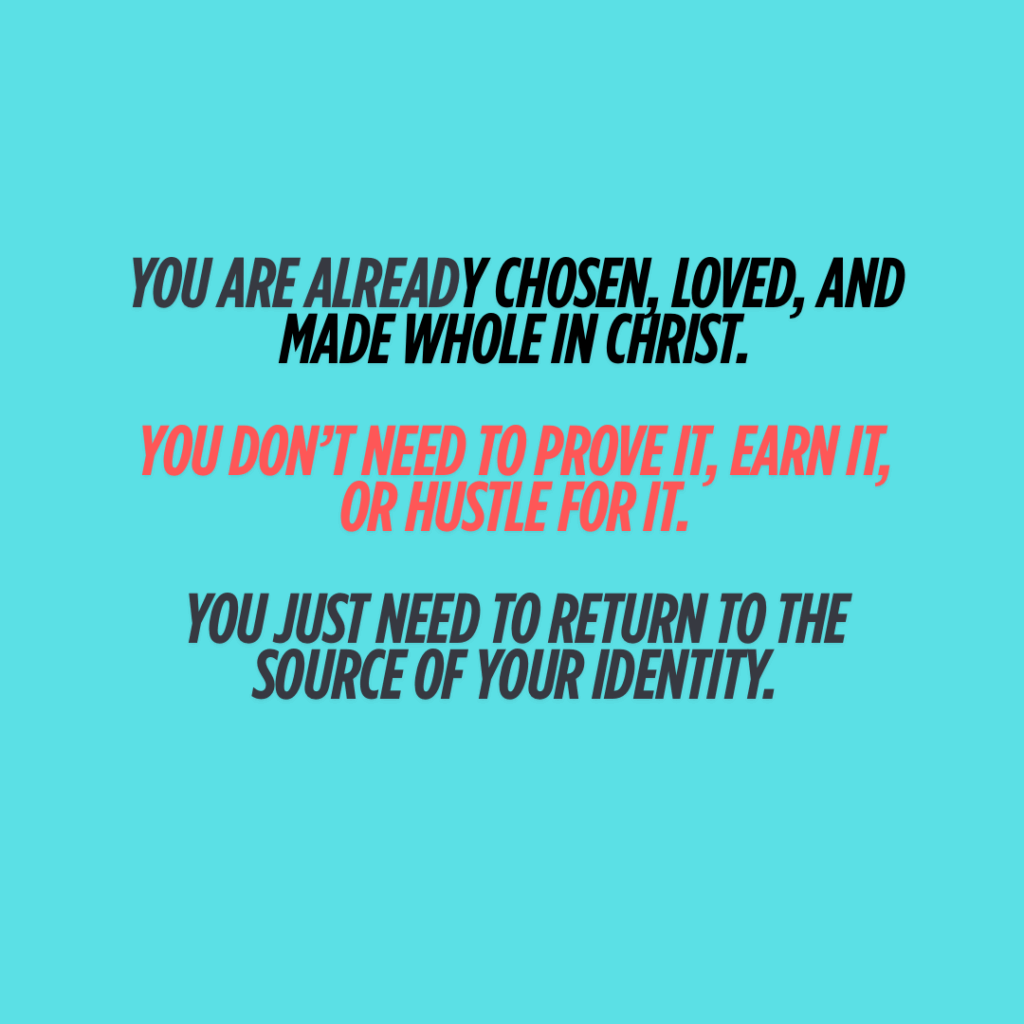
👉🏾 ✝️ Your true identity is eternal, unshakable, and not up for debate!

  • You are chosen. (1 Peter 2:9)
  • You are loved. (Romans 8:38–39)
  • You are fearfully and wonderfully made. (Psalm 139:14)
  • You are complete in Him. (Colossians 2:10)

A Prayer for Today:

Father God,

I confess that I’ve allowed others to define me more than I’ve listened to You.

Heal the parts of my heart that seek validation in people, not You.

Remind me daily of who I am in Christ—chosen, loved, whole, and complete.

Let Your truth be the foundation of my identity.

In Jesus’ name, Amen.

Why Knowing Your Identity in Christ Changes Everything

Have you ever asked yourself, “Who am I, really?”

Not in terms of your job, relationship status, personality type, or even your ministry role—but who you are in the eyes of God?

So many Christian women are walking around with quiet confusion.

They’re strong on the outside, but inwardly struggling with insecurity, codependency, comparison, and deep emotional wounds.

They’ve forgotten (or never learned) what God says about them.

When you don’t know who you are in Christ, you’ll believe anything the world—or your past—tells you.

That’s how we end up:

• Overfunctioning in relationships

• Saying yes to things that violate our peace

• Looking for worth in achievements, approval, or appearance

• Feeling like we’re “too much” or “not enough”

This is the silent dysfunction of lost identity—and Jesus came to restore it.

If you’re tired of not knowing who you are beyond your roles, relationships, or responsibilities— it is time to reclaim your God-given identity.

✝️👉🏾 You Are Who God Says You Are…

✝️👉🏾Don’t let your past define your future.

✝️👉🏾Don’t let the world write your name.

✝️👉🏾Let Jesus (The Word) tell you who you are—and then live like it’s true!

Finding your identity in Christ means choosing to believe what God says is true about you—above what others have said, what life has done, or what your emotions might feel.

(This week’s posts, articles, and resources are created to help you return to the only identity that truly matters—your identity in Christ.)

Are You Tired of Carrying What God Never Meant for You to Hold?

Unforgiveness is heavy.

It drains our peace, steals our joy, and builds invisible walls between us and the freedom God desires for us.

Many of us carry emotional baggage from past hurts, betrayals, and disappointments—thinking we’re protecting ourselves, but in reality, we’re only prolonging our pain.

It’s time to forgive— to release the offense, surrender the hurt, and receive healing through Christ.

You deserve peace.

You deserve joy.

You deserve to be free.

God’s Word is clear about the importance of forgiveness—not only as a command but as a path to healing.

“Bear with each other and forgive one another if any of you has a grievance against someone. Forgive as the Lord forgave you.” —Colossians 3:13 (NIV)

Forgiveness doesn’t mean what happened was okay. It means you’re choosing to release the offense and trust God to be your healer and your defender. When we forgive, we make space for God’s peace to move in.

Letting go of unforgiveness isn’t always a one-time decision—it’s often a process. But it begins with one brave step of faith. God doesn’t ask us to do it alone. His Spirit empowers us to forgive, even when it seems impossible.

Here’s how you can begin:

  1. Pray honestly – Tell God how you feel and ask for His strength to release the pain.
  2. Speak forgiveness aloud – Declare it even before your emotions catch up.
  3. Choose to bless – Pray for the person who hurt you. Blessing them breaks the cycle of bitterness.
  4. Remind yourself of God’s grace – You’ve been forgiven much. 

When we forgive, we make space for God’s peace to move in.

It’s time to drop the weight!

Do You Suppress Your Emotions? 🤔

What Are Suppressed Emotions?

Suppressed emotions are feelings that are ignored, denied, or pushed aside rather than acknowledged and processed. Common examples include:

  • Minimizing pain by saying, “I’m fine” when you’re not
  • Avoiding conflict to keep the peace
  • Ignoring grief or disappointment in an effort to “stay strong”

While these habits may seem harmless—or even virtuous—they often stem from fear, shame, or learned patterns of dysfunction.

Left unchecked, they become internal barriers to emotional freedom and spiritual growth.

When you suppress emotions, you disconnect from your heart—the very place where God wants to dwell.

A hardened heart can make it difficult to experience His presence, hear His voice, or feel true joy in worship.

“Today, if you hear his voice, do not harden your hearts…” – Hebrews 3:15

How to Begin the Healing Process

  1. Acknowledge your feelings honestly in prayer
  2. Invite the Holy Spirit to reveal hidden wounds
  3. Seek godly counsel or Christ-centered coaching
  4. Practice journaling or emotional processing through Scripture
  5. Choose forgiveness—even if the emotions are still raw

Let your emotions be the invitation to deeper intimacy, not a barrier to breakthrough.


How Jesus Heals the Wounds We Hide

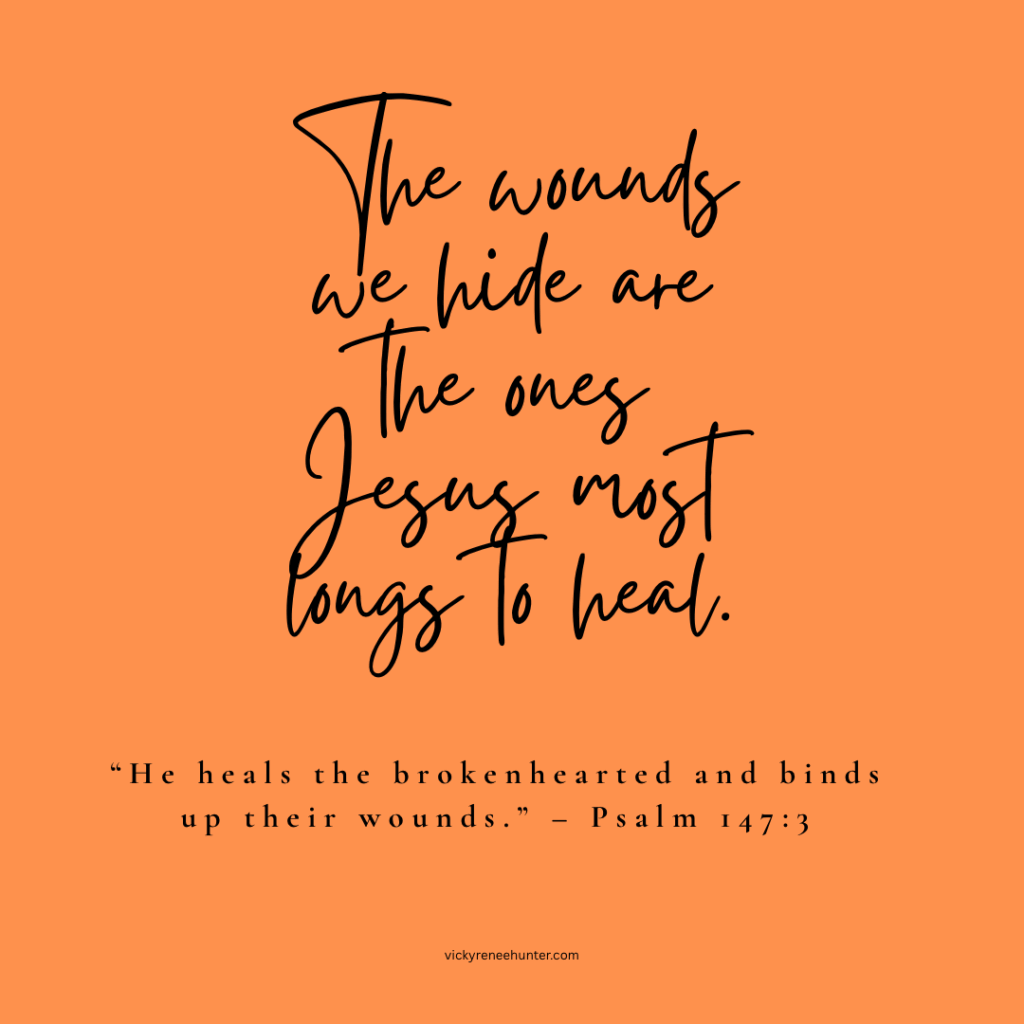
We’ve all done it—pushed down the pain, smiled when we were breaking inside, and convinced ourselves that if we could just move on, we’d be okay.

But deep within, we carry hidden wounds—betrayals, rejection, abuse, shame, fear, abandonment—buried beneath layers of performance, perfectionism, or people-pleasing.

These secret places of our soul can feel too messy, too broken, or too vulnerable to bring into the light. But Jesus already sees them. And more than that—He longs to heal them.

In Genesis 16, we meet Hagar—a woman discarded and mistreated. In her pain, she flees into the desert. Alone and unseen by everyone else, Hagar is found by God. He calls her by name and meets her with compassion. Overwhelmed, she declares, “You are the God who sees me” (Genesis 16:13, NIV).

God still sees us today.

The tears we cry in silence,

the fears we can’t voice,

the wounds we’ve hidden from the world—

He knows them all.

👉🏾✝️ And He is not repelled by our brokenness; He is moved by it.

Isaiah 53:5 tells us, “By His wounds, we are healed.”

👉🏾✝️ Jesus didn’t just come to save our souls—He came to make us whole.

He bore the weight of our sin and our sorrow.

🙌🏾✝️ When He reached out to the leper, dined with the outcast, and restored the broken, He revealed the heart of a Savior who meets us where we are and makes us new.

When we hide our wounds, we also hide from healing.

But when we surrender, we find that Jesus doesn’t just put a bandage on our pain—He transforms it.

He turns mourning into joy, ashes into beauty, and shame into testimony.

🙏🏾 A Prayer to Invite His Healing

Jesus, I’ve carried wounds that no one sees. I’ve hidden pain because I wasn’t sure what to do with it. But You see me, and You love me still. Today, I invite You into the broken places of my heart. Heal what’s hurting. Restore what’s been lost. Help me believe that nothing is beyond Your reach. Make me whole. In Your name, Amen.