
The Difference Between Surviving and Flourishing

Many people think they’re flourishing. But they’re actually surviving.

There’s a difference.

Surviving says: “Just get through the day.”

Flourishing says: “Be fully present in it.”

Surviving is driven by pressure. Flourishing is rooted in purpose.

Surviving is constantly reacting. Flourishing is intentionally responding.

Surviving asks: “What do I need to do next?”

Flourishing asks: “Who am I becoming?”

The challenge is that survival can look successful.

You’re productive. Responsible. Dependable.

You’re checking the boxes and meeting expectations.

But underneath?

You’re exhausted. Disconnected. Running on fumes.

Many high-capacity people live this way for years. Not because they’re failing. But, because they’ve become so good at functioning that they stop noticing they’re merely surviving.

Flourishing isn’t about having a perfect life. It’s about living from a different place.

A place of peace instead of pressure, alignment instead of performance, wholeness instead of constant striving

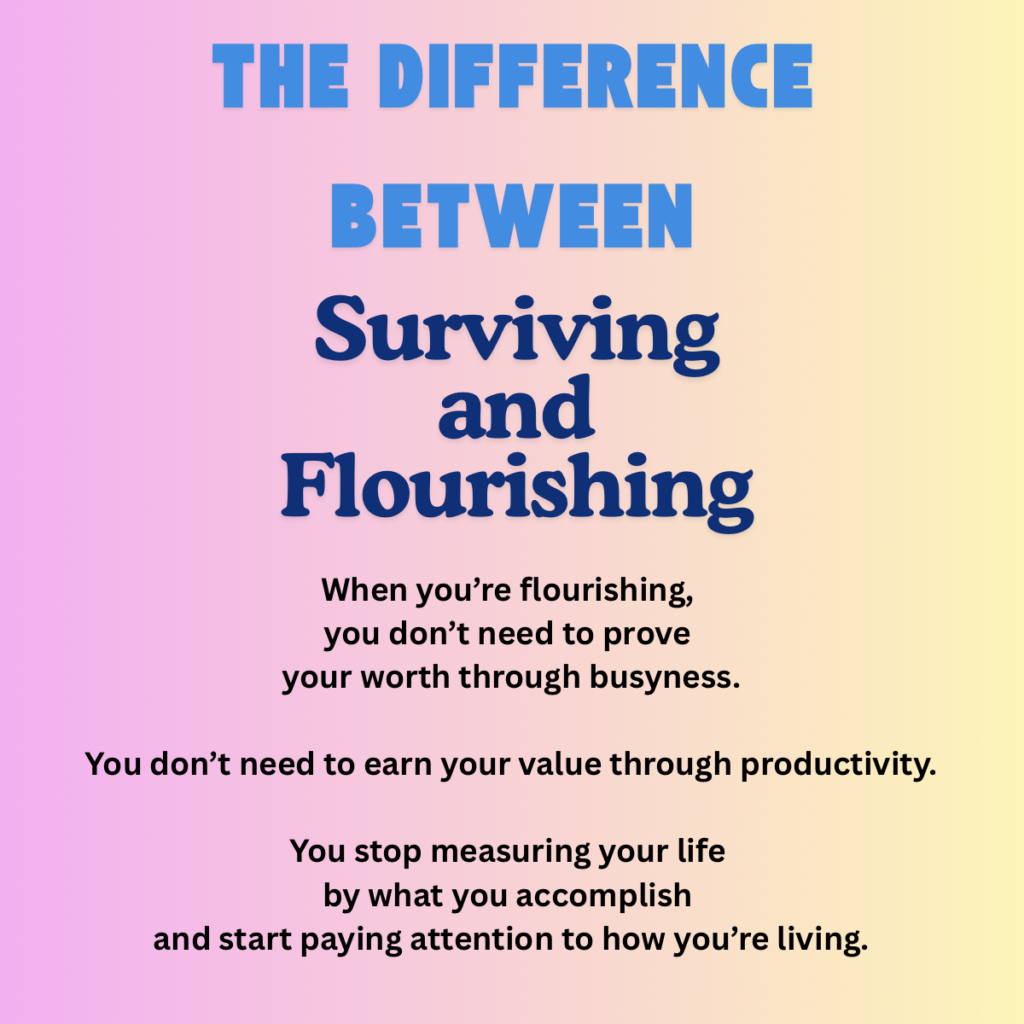
When you’re flourishing, you don’t need to prove your worth through busyness.

You don’t need to earn your value through productivity.

You stop measuring your life by what you accomplish and start paying attention to how you’re living.

Because the goal was never simply to survive. The goal was always to grow. To thrive. To flourish.

Sometimes the most important question isn’t:
“How much am I getting done?”

It’s: “Am I truly flourishing—or am I just surviving well?”

The Problem with Micromanaging People

One of the fastest ways to weaken a team? Micromanage it.

At first, micromanaging can look like good leadership.

You’re involved.
You’re attentive.
You’re making sure things are done correctly.

But beneath the surface, something else is happening.

You’re communicating a message you may never intend to send:

“I don’t trust you.”

Micromanagement isn’t usually about poor employees.

It’s usually about fear.

Fear of mistakes.
Fear of failure.
Fear of losing control.
Fear that if you don’t stay involved in everything, something will fall apart.

So leaders check.
Recheck.
Follow up.
Hover.

And eventually, people stop taking ownership.

Why?

👉🏾 Because when every decision is questioned, people stop deciding. 👈🏾

👉🏾 When every task is controlled, people stop thinking. 👈🏾

👉🏾 When every detail is managed, people stop
growing.👈🏾

The irony is this:

Micromanagement often creates the very problems it’s trying to prevent.

Less confidence. Less initiative.
Less innovation. And more dependence.

Strong leadership isn’t about controlling every outcome.

🏁 It’s about creating an environment where people can succeed without needing constant supervision.

That requires: Trust. Clarity. Accountability.

Not control.

The best leaders don’t build teams that depend on them for everything.

They build teams that can thrive because of what they’ve developed within them.

Because leadership isn’t measured by how much you control. It’s measured by how much capability you create in others.

Sometimes the next level of leadership isn’t doing more.

It’s letting go enough for others to grow.

The Difference Between Surviving and Flourishing

Many people who are surviving look successful.

Their calendars are full.

Their responsibilities are managed.

Their achievements are visible.

But beneath the surface, they are exhausted.

They’re carrying more than they were meant to carry.
They’re living from pressure rather than peace.
And, they’re pushing through.

That’s surviving.

Flourishing is different.

Flourishing isn’t doing more. It’s becoming whole.

It’s learning to live rooted rather than rushed. Trusting rather than controlling.

Growing rather than merely performing. Being nourished instead of depleted.

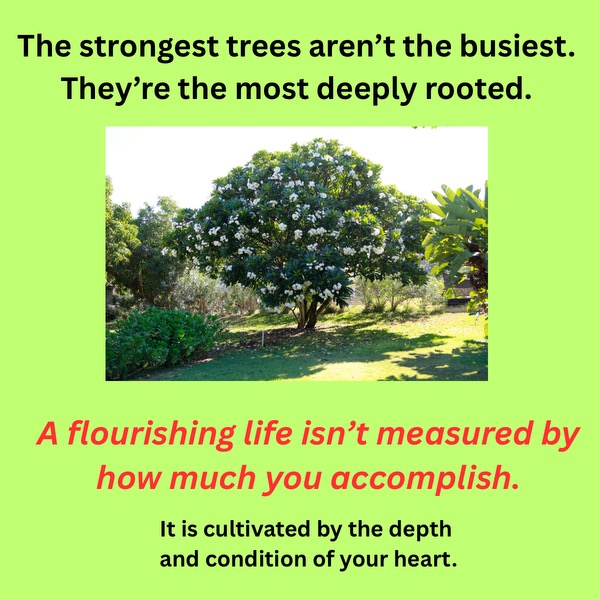
A flourishing life isn’t measured by how much you accomplish.

It’s measured by the depth and condition of your heart.

The strongest trees aren’t the busiest. They’re the most deeply rooted.

For years, I thought flourishing was something you achieved.

I’ve come to believe it’s something you cultivate.

Don’t Despise the Process

Hey friend 😊

Today I want to remind you of something we often forget: transformation is slow. And that’s okay.

We live in a culture that celebrates quick fixes, instant results, overnight success, and fast growth, but real change — God-given transformation — is steady, deep, and lasting. 

Healing, breaking free from codependency, learning new patterns of faith, or walking away from toxic cycles takes time. And that’s okay

So keep showing up. Even when it feels small. Even when it feels slow. Every prayer, every boundary, every faith step is planting seeds that will grow in due time. You may not see the fruit yet, but God promises in Galatians 6:9 that if we don’t give up, we will reap a harvest.

It’s not about doing everything perfectly; it’s about showing up consistently.

Trust God’s process. Because slow doesn’t mean stuck — it means steady. And steady leads to freedom.

🎆 Freedom Worth Celebrating 🇺🇸

As we celebrate our nation’s independence today, let us also remember the greater freedom we’ve been given—one that no law, war, or government could ever secure.

“So if the Son sets you free, you will be free indeed.” — John 8:36 

And when He sets you free—you are free indeed. Not just a little free. Not just free on the Fourth, Not free with conditions. Truly, fully, and forever free.

True freedom isn’t just political—it’s personal.

Today, may we celebrate not only liberty for our country—but liberty for our souls.

Praise the Lord 🙌🏾✝️

Lord Jesus, thank You for the ultimate gift of freedom. Help me to live not just as a citizen of this country, but as a citizen of the Kingdom. Show me where I’m still living in bondage, and give me the courage to walk in the full freedom You died to give me. Today and every day, may my life reflect the liberty of Your love.

In Your mighty name, Amen.