The Problem with Micromanaging People

One of the fastest ways to weaken a team? Micromanage it.

At first, micromanaging can look like good leadership.

You’re involved.
You’re attentive.
You’re making sure things are done correctly.

But beneath the surface, something else is happening.

You’re communicating a message you may never intend to send:

“I don’t trust you.”

Micromanagement isn’t usually about poor employees.

It’s usually about fear.

Fear of mistakes.
Fear of failure.
Fear of losing control.
Fear that if you don’t stay involved in everything, something will fall apart.

So leaders check.
Recheck.
Follow up.
Hover.

And eventually, people stop taking ownership.

Why?

👉🏾 Because when every decision is questioned, people stop deciding. 👈🏾

👉🏾 When every task is controlled, people stop thinking. 👈🏾

👉🏾 When every detail is managed, people stop
growing.👈🏾

The irony is this:

Micromanagement often creates the very problems it’s trying to prevent.

Less confidence. Less initiative.
Less innovation. And more dependence.

Strong leadership isn’t about controlling every outcome.

🏁 It’s about creating an environment where people can succeed without needing constant supervision.

That requires: Trust. Clarity. Accountability.

Not control.

The best leaders don’t build teams that depend on them for everything.

They build teams that can thrive because of what they’ve developed within them.

Because leadership isn’t measured by how much you control. It’s measured by how much capability you create in others.

Sometimes the next level of leadership isn’t doing more.

It’s letting go enough for others to grow.

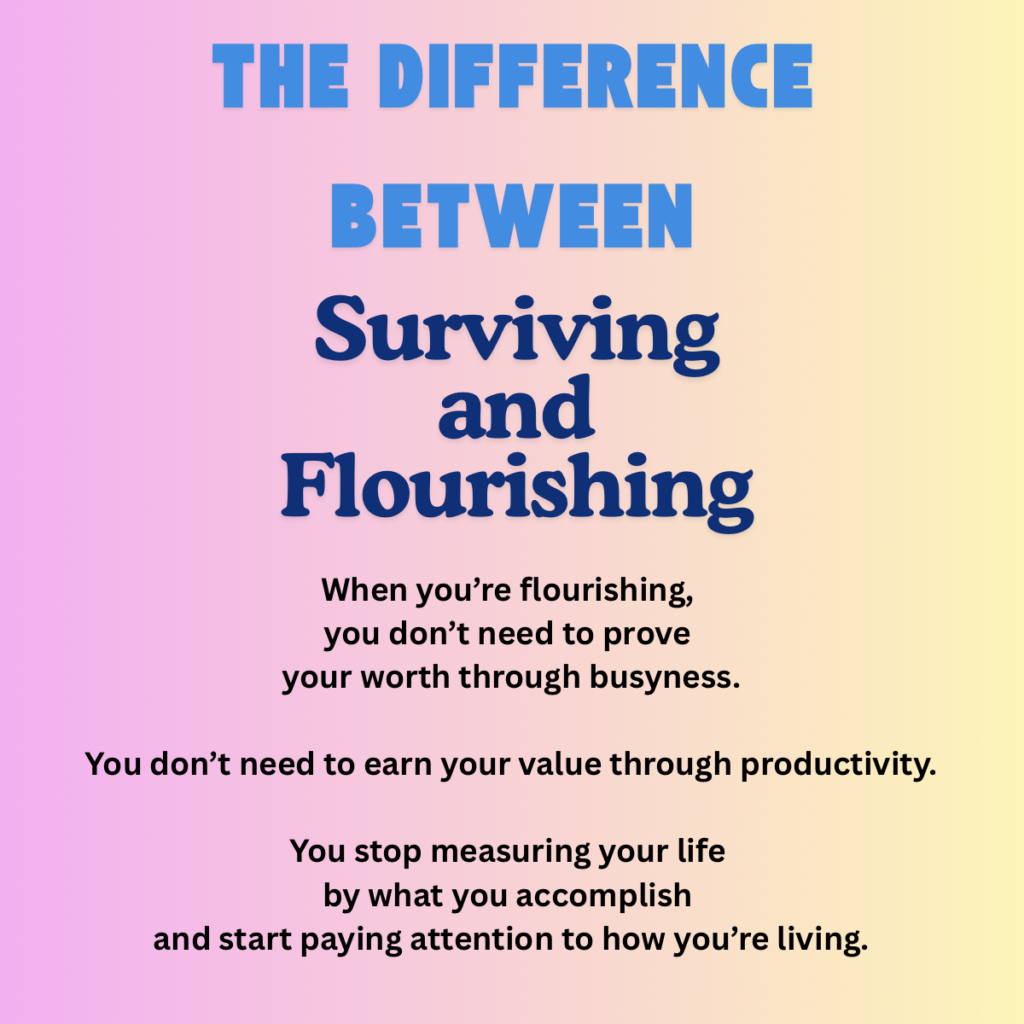
The Difference Between Surviving and Flourishing

Many people who are surviving look successful.

Their calendars are full.

Their responsibilities are managed.

Their achievements are visible.

But beneath the surface, they are exhausted.

They’re carrying more than they were meant to carry.
They’re living from pressure rather than peace.
And, they’re pushing through.

That’s surviving.

Flourishing is different.

Flourishing isn’t doing more. It’s becoming whole.

It’s learning to live rooted rather than rushed. Trusting rather than controlling.

Growing rather than merely performing. Being nourished instead of depleted.

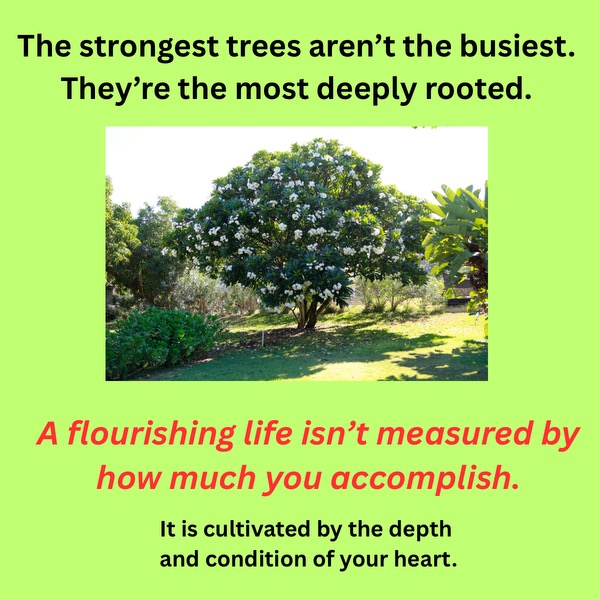
A flourishing life isn’t measured by how much you accomplish.

It’s measured by the depth and condition of your heart.

The strongest trees aren’t the busiest. They’re the most deeply rooted.

For years, I thought flourishing was something you achieved.

I’ve come to believe it’s something you cultivate.

Self Sabotage — habits that once helped you survive…

Self-sabotage doesn’t start at work.
It doesn’t start in leadership.
It doesn’t even start in relationships.

It starts in what you learned to believe about yourself.

Built over time from experiences that taught you:

Stay safe.
Stay acceptable.
Stay in control.

So you adapted.

And those adaptations worked.

Until they didn’t.

At work, it can show up as:

  • overworking to prove your value
  • hesitating to speak up
  • second-guessing decisions you’re capable of making

…because somewhere along the way, you learned:

“I have to earn my place.”

In relationships, it often looks like:

  • over-giving to feel secure
  • pulling back to avoid being hurt
  • expecting things to go wrong

Because part of you learned:

“Connection isn’t always safe.”

In leadership, it can show up as:

  • needing to control everything
  • avoiding conflict
  • tying your identity to performance

Because the underlying belief is:

“If I don’t hold this together, everything falls apart.”

Here’s the deeper truth:

Self-sabotage isn’t random. It’s protective.

It’s your mind trying to prevent pain based on past experiences—

👉🏾 even when those patterns no longer serve you. 👈🏾

…what once protected you…can eventually limit you.

Because the same patterns that helped you stay safe…can keep you from growing.

The shift begins with awareness.

Not judgment.
Not pressure.
Awareness.

“What belief is driving this pattern?”

Because when you understand the origin…you can finally change the pattern.

Growth doesn’t come from pushing harder.

It comes from seeing clearly.

It’s unlearning what you’ve been carrying.

Cultivate Contentment

🙏🏾✝️ Father, thank You for this season—every blessing, every lesson, every stretch, and every surprise.

Teach me to trust Your timing and Your heart toward me.

Anchor my identity in You alone.

Quiet every voice of comparison, rush, or dissatisfaction.

Fill me with Your peace and remind me that I am enough because You are enough in me.

Amen. 🙏🏾✝️

Contentment: Learning to Live Fulfilled, Not Frustrated

In a world that constantly whispers “more… faster… bigger… better,”contentment can feel like a radical act of faith. 

For many Christian women, the struggle isn’t just about wanting more—it’s about wondering if who we are and what we have is enough

And beneath the pressure to perform, achieve, or appear perfect, our hearts quietly long for peace.

But God’s voice invites us into something gentler… something wiser: 

Contentment. 

True contentment is not passive… it’s powerful. It’s the quiet confidence that says:

“Lord, Your timing is perfect. Your plan is good. And my life is safely in Your hands.”

You don’t find contentment by achieving more—you find it by aligning your heart with God’s.

Psalm 23:1 reminds us:

“The Lord is my shepherd; I shall not want.”

When God shepherds our lives, we lack nothing essential for each season.

Contentment is spiritual strength. It’s emotional maturity. It’s the posture of a heart rooted in God, not in circumstances.

Staying content begins with a simple but powerful truth:

Everything God allows in your life is either growing you, stretching you, or preparing you for what’s next. And that perspective alone can shift frustration into focus, and comparison into confidence.

 Contentment IS NOT:

• Settling for less than God has for you

• Staying stuck because of fear

• Ignoring your desires or purpose

• Pretending you don’t want more

• Shrinking to make others comfortable

 Contentment IS:

• Trusting God’s timing

• Finding peace in your present season

• Being grateful while still growing

• Releasing the need to compare

• Believing you are already enough in Christ

Contentment empowers you to embrace today while still being excited for tomorrow.

That’s the beauty of contentment—it makes space for gratitude and growth at the same time.

👉🏾 You can desire more for your life without despising where you are.

👉🏾 You can aim higher without rushing ahead of God.

👉🏾 You can dream boldly and still rest deeply.