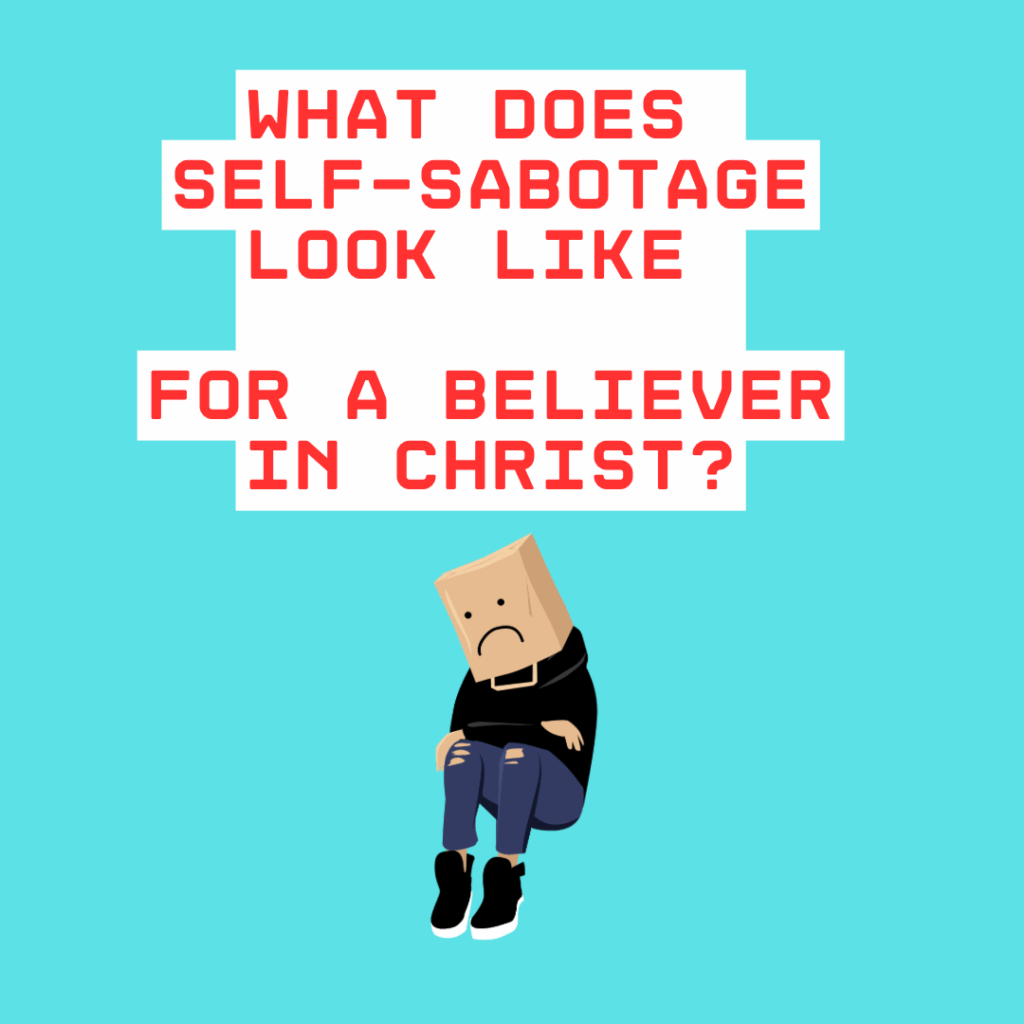

Have you ever felt like you’re the one getting in your own way—even in your walk with God?
You’re not alone.
Self-sabotage doesn’t just show up in careers or relationships—it sneaks into our spiritual lives, too.
And as believers, it can be especially confusing because we know God has called us, chosen us, and forgiven us. But still… we struggle. We delay. We doubt. We hide.
Let’s talk about what self-sabotage really looks like for someone who loves Jesus.
Doubting God’s Promises (Even Though You Know Better)
You’ve read the scriptures. You’ve heard the sermons. But something in you still whispers, “What if God’s promises aren’t really for me?” That quiet doubt can lead to inaction—because if you’re unsure God will come through, why bother stepping out in faith?
⸻
Being a Perfectionist in the Name of “Excellence”
Sometimes, we hide behind perfectionism and call it “doing things for God.” But deep down, it’s fear—fear of failing, of disappointing others, of not being good enough. We forget that God isn’t asking for perfect—He’s asking for obedience and surrender.
⸻
Wearing Guilt Like It’s a Spiritual Discipline
You’ve repented. God’s forgiven you. But you keep reliving the past like it’s still who you are. Guilt is not from God. Conviction leads to freedom—but shame keeps you stuck. And when you’re stuck, you can’t move into what God has for you.
⸻
Avoiding Prayer or the Word Because You’re “Off Track”
Ever ghosted God? You miss a few days in the Word or skip church, and suddenly you feel too far gone to even try again. So you avoid it altogether. But that’s the self-sabotage talking. God’s not waiting to scold you—He’s waiting to love on you.
⸻
Talking Down to Yourself—Even in Prayer
You pray, but your prayers sound more like a guilt trip: “God, I know I’m just a mess… I’m always failing You.” That kind of self-talk isn’t humility—it’s identity confusion. God doesn’t call you by your struggle. He calls you His.
⸻
Being Scared of Blessings (Yes, Really)
This one can be sneaky. You ask God for favor or opportunities, and when they come, you shut down or self-destruct. Why? Because deep down, you don’t feel worthy of good things—even when God is the one giving them.
⸻
Isolating Yourself When You Need People Most
You pull away from community, thinking you’ll “get it together” first. But isolation only makes things louder in your head. God created you for connection—for iron to sharpen iron. Healing often happens in community, not in solitude.
⸻
Delaying Obedience Because It Feels Too Big
You know what God’s asking you to do. Start the ministry. Share your testimony. Write the book. But fear whispers, “What if you fail?” So you stall. Delay. Distract yourself with other things. But delayed obedience is still disobedience—and deep down, you know that.
⸻
Putting More Faith in Self-Help Than the Holy Spirit
Therapy is great. Books are helpful. But when you start relying more on strategies than the Savior, you’re sabotaging your spiritual power. Worldly wisdom can’t replace godly guidance. It should supplement, not substitute.
⸻
The Good News? You Don’t Have to Stay Stuck.
If any of this sounds familiar, don’t beat yourself up. Recognizing the pattern is the first step to breaking it.
Self-sabotage loses its power when we expose it to the light of truth—God’s truth.
You’re not too messy, too far behind, or too broken. You are loved, chosen, called, and equipped.
It’s time to stop standing in your own way—and start stepping into the life God designed for you.
In today’s world of social media rants, heated debates, and growing tensions, it’s easy to get swept up in arguments and lose sight of grace-filled communication.
Yet, the timeless wisdom of Proverbs 15:1 reminds us,
“A gentle answer turns away wrath, but a harsh word stirs up anger.”
This simple yet profound principle has the power to
*de-escalate conflict,
*protect relationships, and
*promote peace
—even in the most challenging situations.
Gentle words have the power to:
• Lower emotional defenses.
• Create space for healthy dialogue.
• Shift conversations from accusation to understanding.
• Break cycles of offense and retaliation.
Jesus Himself modeled gentleness in the face of hostility. Even when falsely accused, He responded with grace, truth, and restraint. As followers of Christ, we are called to do the same.
“Let your conversation be always full of grace, seasoned with salt, so that you may know how to answer everyone.” — Colossians 4:6
Prayer
Lord, teach me to answer with gentleness, even when my emotions pull me toward harshness. Help me to reflect Your love and wisdom in every conversation. Use my words to bring peace, healing, and understanding. Amen.
It drains our peace, steals our joy, and builds invisible walls between us and the freedom God desires for us.
Many of us carry emotional baggage from past hurts, betrayals, and disappointments—thinking we’re protecting ourselves, but in reality, we’re only prolonging our pain.
It’s time to forgive— to release the offense, surrender the hurt, and receive healing through Christ.
You deserve peace.
You deserve joy.
You deserve to be free.
God’s Word is clear about the importance of forgiveness—not only as a command but as a path to healing.
“Bear with each other and forgive one another if any of you has a grievance against someone. Forgive as the Lord forgave you.” —Colossians 3:13 (NIV)
Forgiveness doesn’t mean what happened was okay. It means you’re choosing to release the offense and trust God to be your healer and your defender. When we forgive, we make space for God’s peace to move in.
Letting go of unforgiveness isn’t always a one-time decision—it’s often a process. But it begins with one brave step of faith. God doesn’t ask us to do it alone. His Spirit empowers us to forgive, even when it seems impossible.
Here’s how you can begin:
Pray honestly – Tell God how you feel and ask for His strength to release the pain.
Speak forgiveness aloud – Declare it even before your emotions catch up.
Choose to bless – Pray for the person who hurt you. Blessing them breaks the cycle of bitterness.
Remind yourself of God’s grace – You’ve been forgiven much.
When we forgive, we make space for God’s peace to move in.