The Power of Calm Responses in a Chaotic World

In today’s world of social media rants, heated debates, and growing tensions, it’s easy to get swept up in arguments and lose sight of grace-filled communication.

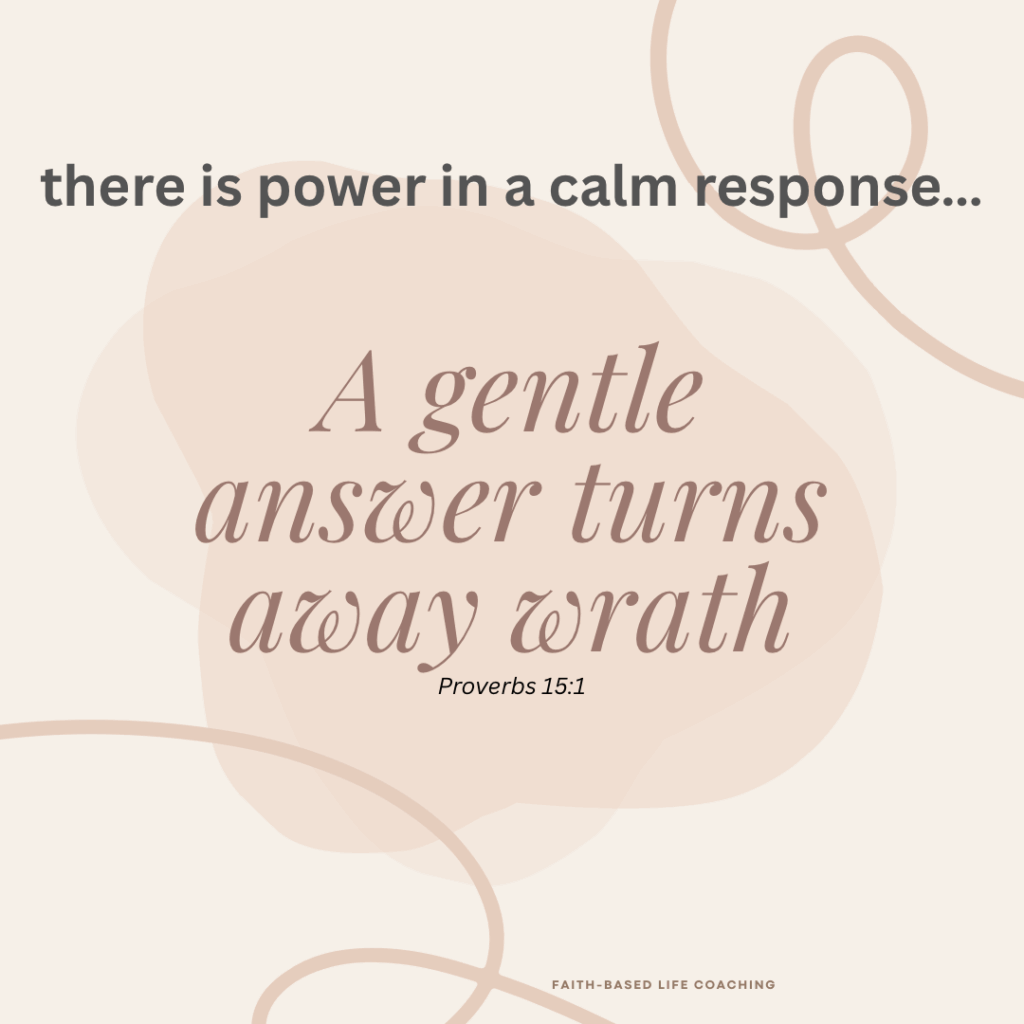
Yet, the timeless wisdom of Proverbs 15:1 reminds us,

“A gentle answer turns away wrath, but a harsh word stirs up anger.”

This simple yet profound principle has the power to

*de-escalate conflict,

*protect relationships, and

*promote peace

—even in the most challenging situations.

Gentle words have the power to:

• Lower emotional defenses.

• Create space for healthy dialogue.

• Shift conversations from accusation to understanding.

• Break cycles of offense and retaliation.

Jesus Himself modeled gentleness in the face of hostility. Even when falsely accused, He responded with grace, truth, and restraint. As followers of Christ, we are called to do the same.

“Let your conversation be always full of grace, seasoned with salt, so that you may know how to answer everyone.” — Colossians 4:6

Prayer

Lord, teach me to answer with gentleness, even when my emotions pull me toward harshness. Help me to reflect Your love and wisdom in every conversation. Use my words to bring peace, healing, and understanding. Amen.
 Why Vulnerability Is Vital to Spiritual Transformation

Real transformation doesn’t happen in the place of pretending. It happens in the place of vulnerability.

So often we strive, perform, or try to hold it all together because it feels safer that way.

But friend, God doesn’t need your perfection—He wants your honest, open, surrendered heart.

It’s when we admit, “Lord, I can’t do this on my own” that heaven meets earth in the most powerful ways.

That’s where healing begins.

That’s where breakthrough begins.

That’s where transformation begins.

Psalm 51:17 says, “The sacrifice you desire is a broken spirit. You will not reject a broken and repentant heart, O God.”

Let this be your reminder today:

Your vulnerability is not an obstacle to growth—it’s the very doorway to the freedom God wants to give you.

Are You Tired of Carrying What God Never Meant for You to Hold?

Unforgiveness is heavy.

It drains our peace, steals our joy, and builds invisible walls between us and the freedom God desires for us.

Many of us carry emotional baggage from past hurts, betrayals, and disappointments—thinking we’re protecting ourselves, but in reality, we’re only prolonging our pain.

It’s time to forgive— to release the offense, surrender the hurt, and receive healing through Christ.

You deserve peace.

You deserve joy.

You deserve to be free.

God’s Word is clear about the importance of forgiveness—not only as a command but as a path to healing.

“Bear with each other and forgive one another if any of you has a grievance against someone. Forgive as the Lord forgave you.” —Colossians 3:13 (NIV)

Forgiveness doesn’t mean what happened was okay. It means you’re choosing to release the offense and trust God to be your healer and your defender. When we forgive, we make space for God’s peace to move in.

Letting go of unforgiveness isn’t always a one-time decision—it’s often a process. But it begins with one brave step of faith. God doesn’t ask us to do it alone. His Spirit empowers us to forgive, even when it seems impossible.

Here’s how you can begin:

  1. Pray honestly – Tell God how you feel and ask for His strength to release the pain.
  2. Speak forgiveness aloud – Declare it even before your emotions catch up.
  3. Choose to bless – Pray for the person who hurt you. Blessing them breaks the cycle of bitterness.
  4. Remind yourself of God’s grace – You’ve been forgiven much. 

When we forgive, we make space for God’s peace to move in.

It’s time to drop the weight!

Do You Suppress Your Emotions? 🤔

What Are Suppressed Emotions?

Suppressed emotions are feelings that are ignored, denied, or pushed aside rather than acknowledged and processed. Common examples include:

  • Minimizing pain by saying, “I’m fine” when you’re not
  • Avoiding conflict to keep the peace
  • Ignoring grief or disappointment in an effort to “stay strong”

While these habits may seem harmless—or even virtuous—they often stem from fear, shame, or learned patterns of dysfunction.

Left unchecked, they become internal barriers to emotional freedom and spiritual growth.

When you suppress emotions, you disconnect from your heart—the very place where God wants to dwell.

A hardened heart can make it difficult to experience His presence, hear His voice, or feel true joy in worship.

“Today, if you hear his voice, do not harden your hearts…” – Hebrews 3:15

How to Begin the Healing Process

  1. Acknowledge your feelings honestly in prayer
  2. Invite the Holy Spirit to reveal hidden wounds
  3. Seek godly counsel or Christ-centered coaching
  4. Practice journaling or emotional processing through Scripture
  5. Choose forgiveness—even if the emotions are still raw

Let your emotions be the invitation to deeper intimacy, not a barrier to breakthrough.